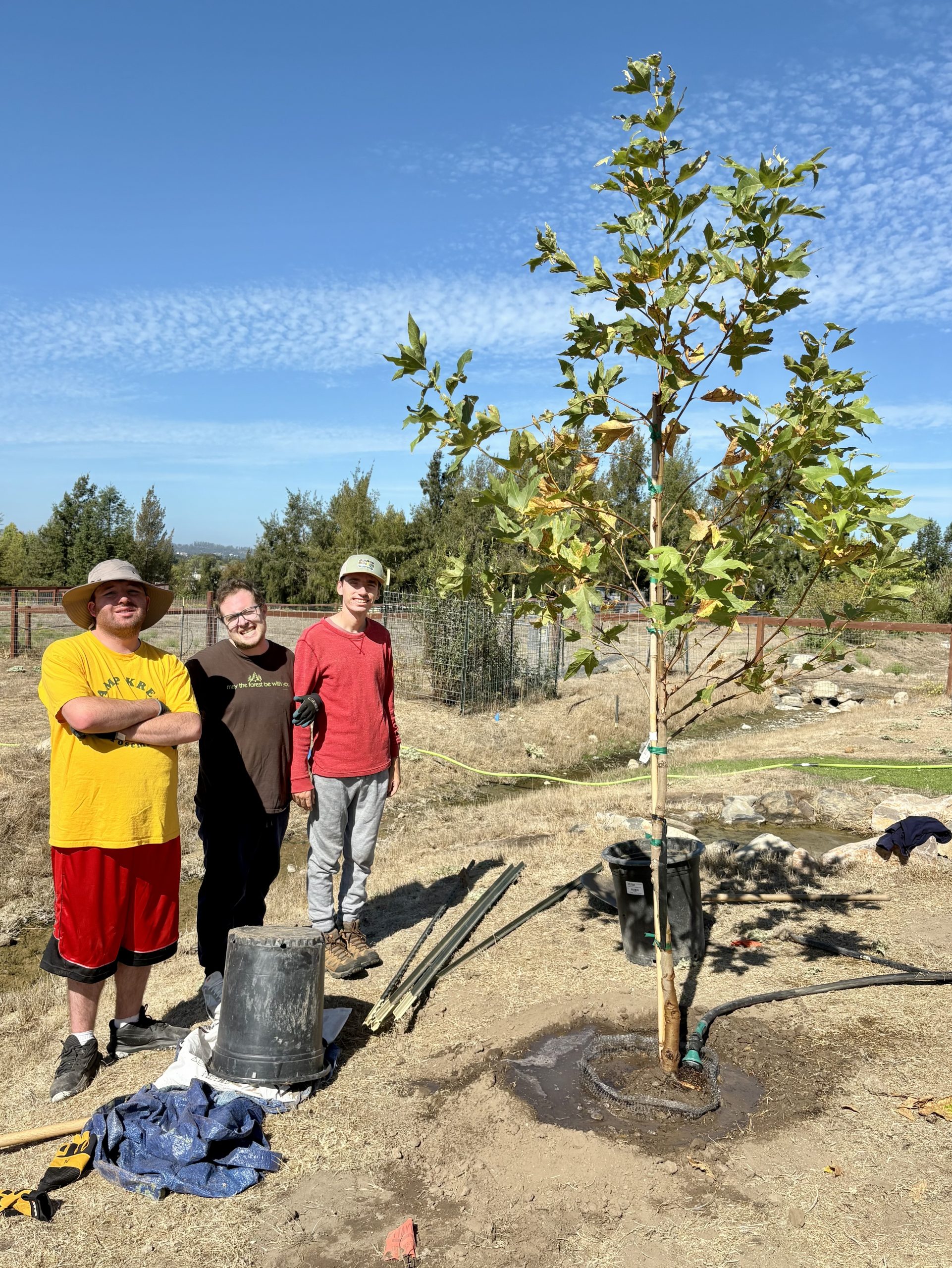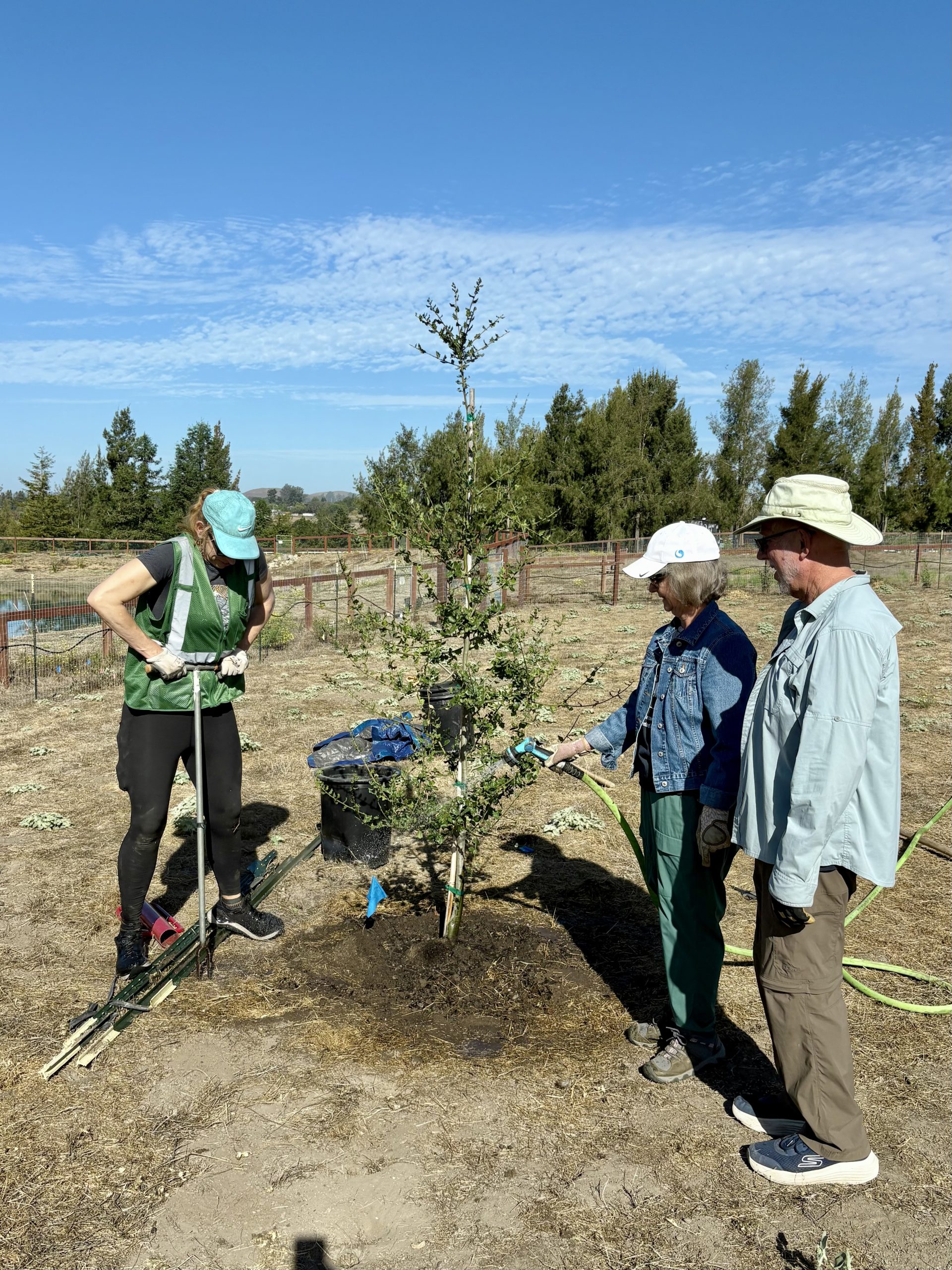
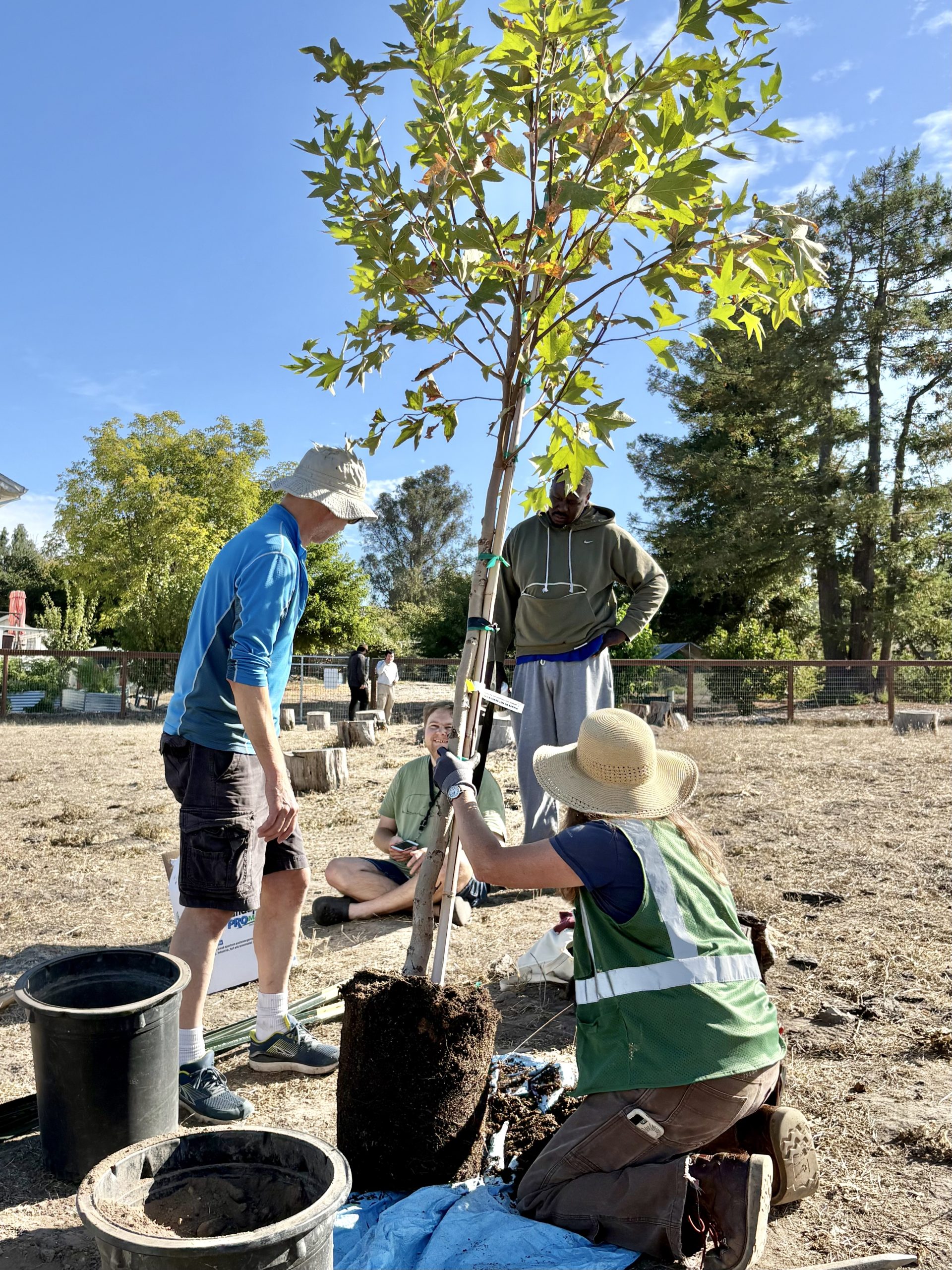
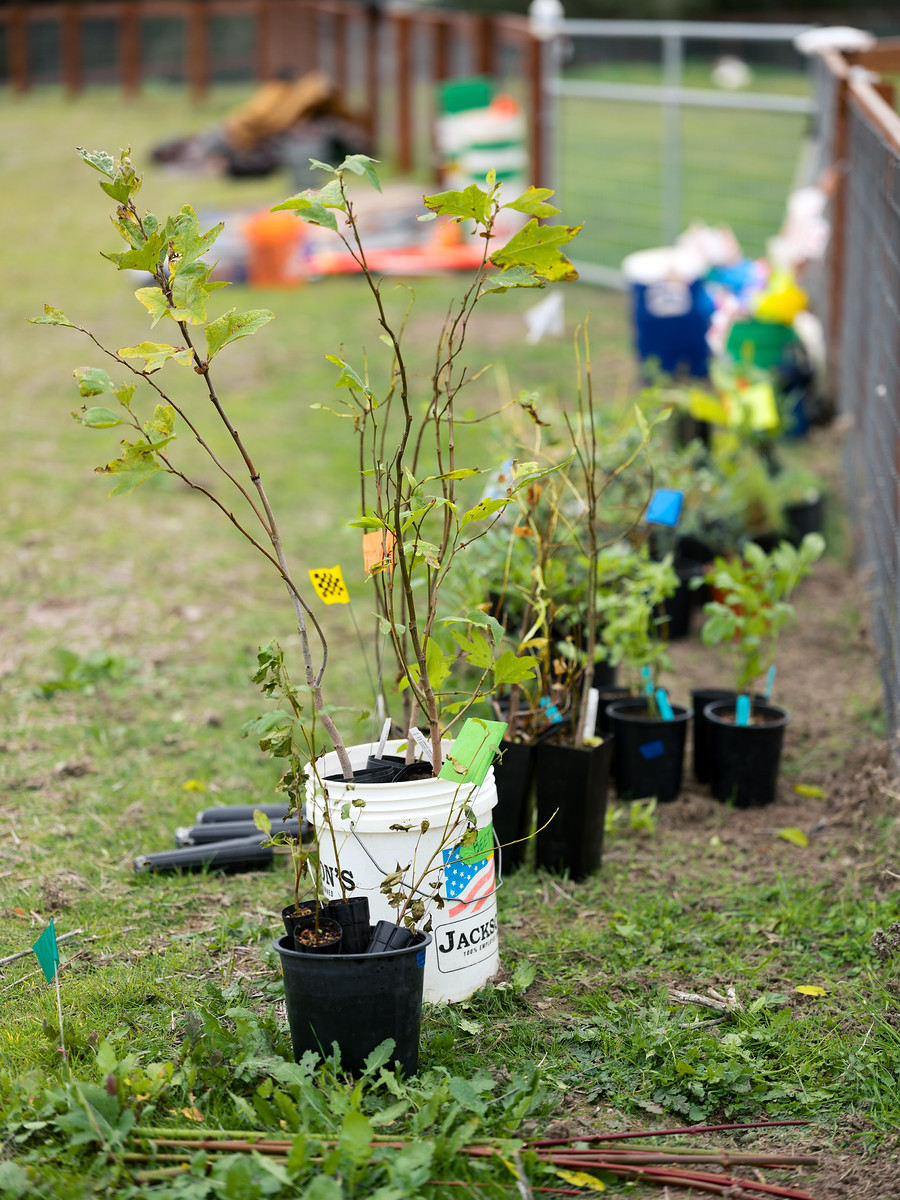
We are committed to restorative land practices by planting California native plants and trees
Native plant and tree restoration benefits wildlife, water resources, soil, air quality, climate resilience and local communities. In California, native tree restoration is particularly valuable because many native species are adapted to the state’s seasonal rainfall, drought conditions, and local ecosystems. Once established, many native trees require less supplemental water and maintenance than plants that are not adapted to local conditions.
Planting of native trees also increases the amount of tree canopy and shade in the area. Tree canopies contribute significantly to heat reduction by absorbing and holding heat, in addition to providing shade for wildlife and humans alike. Tree shade has a cooling effect on local air temperatures, in addition to absorbing airbourne pollutants and particulate matter.
Restoring native plant life help preserve biodiversity and reconnect fragmented habitats. Studies have shown that generally more insects are attracted to natives, likely because the insects and the plants co-evolved together. Native plants and trees also provide resources for pollinators and other wildlife throughout the year, by providing habitats for birds, butterflies and bees.
Community Partnerships for Habitat Restoration
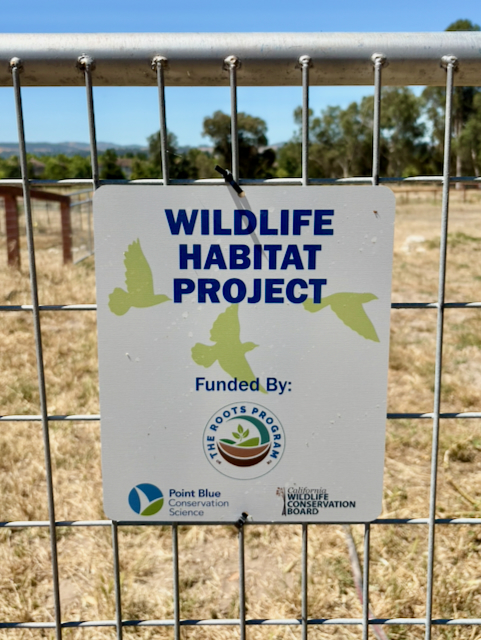
Through partnerships with well respected oragnizations including Fibershed, Point Blue Conservation Science’s Roots and STRAW programs, and ReLeaf Petaluma, we secured grant funding to establish native hedgerows throughout the farm. These collaborative efforts help restore native plant communities, enhance habitat for local wildlife and pollinators, and strengthen the ecological health and resilience of our land.
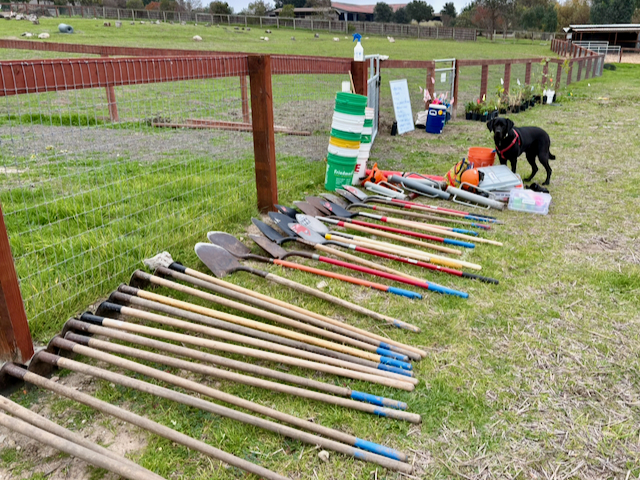
Ecological Resilience
By restoring native trees, plants and the ecosystem around them, it builds resilience in the flora, fauna and human communities which are all interconnected, to create healthier and more sustainable environments for all.
These actions help maintain connections to the local natural environment and preserve California’s unique ecological heritage.